Diabetes Isn't One Appointment. It's Every Day In Between.
The diagnosis takes twenty minutes. The condition doesn't.
You sat in the chair. The doctor said the word. Diabetes.
Maybe they explained it. Maybe they handed you a printout, mentioned a number, talked about diet, and booked a follow-up for three months out.
Then you walked out.
And that is when it actually started.
The short answer: living with diabetes happens mostly between appointments. What helps is understanding your numbers, especially your A1C, keeping your records in one place and having a simple routine for your medications, so the days in between feel less like guesswork.
The Diagnosis Is the Easy Part
The appointment ends in twenty minutes. The condition doesn't.
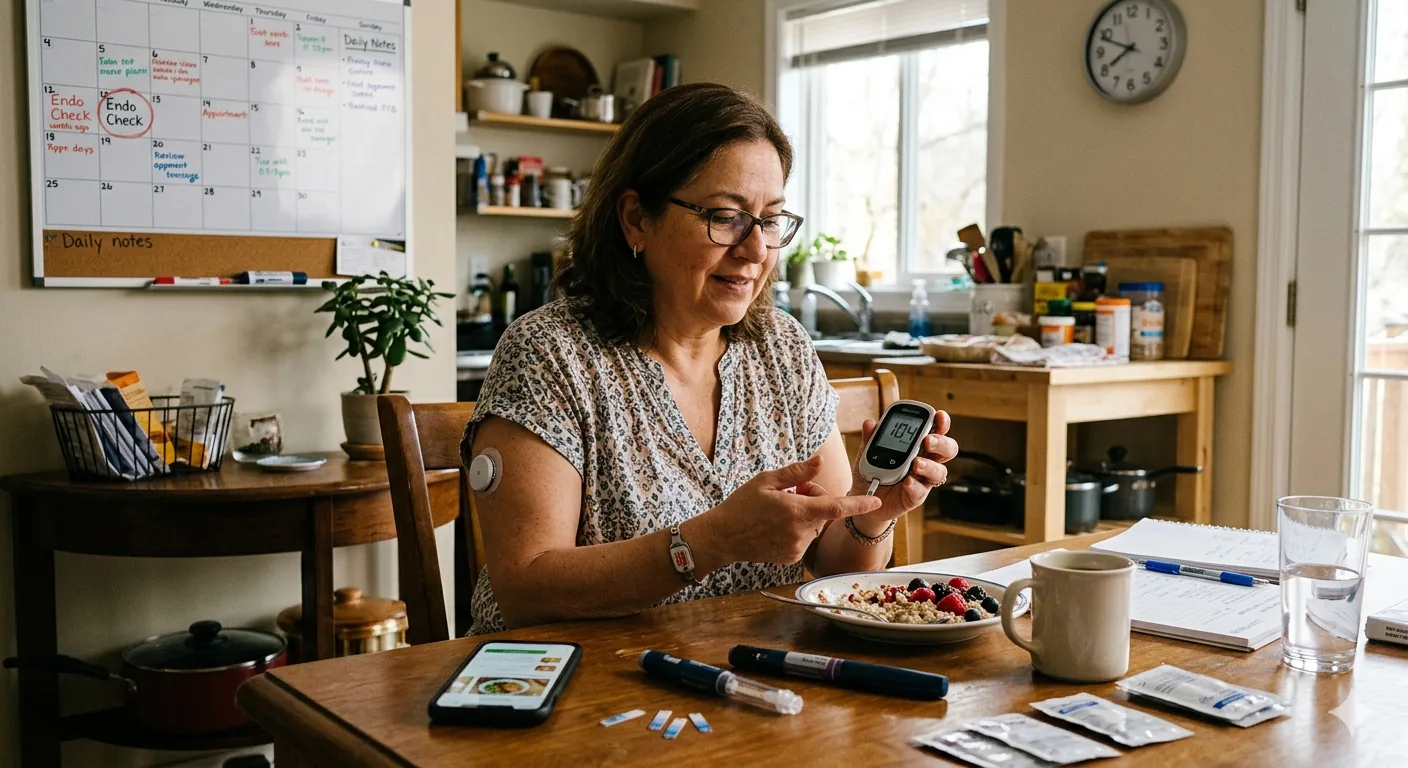
Diabetes isn't something that happens once, in a room, with a professional sitting across from you. It happens every morning when you take the pill. Every meal when you wonder what it's doing to your numbers. Every time you feel off and can't tell if it matters. Every night you lie there doing quiet math about your own body.
Nobody prepares you for the in-between. The doctor handed you a diagnosis. What you actually needed was a way to live with it for the next ten thousand days.
That gap, between one appointment and the next, is where most of the worry lives. And for a long time, you've been left to sit in it alone.
You Were Given a Number You Can't Read
A1C. Fasting glucose. A column of values, a "reference range," and a single appointment that's already over.
You can sense it matters. You just can't tell how much. Is 7.2 fine? Is it bad? Did it go up since last time? What does it mean for what you ate yesterday?
So you do what everyone does. You search it. You land on ten conflicting pages, three of them terrifying, none of them about you.
That's the loneliest part of a chronic condition. Not the diagnosis. The silence after it.
What Does Your A1C Number Mean?
A1C shows your average blood sugar over roughly the past three months, as a percentage. To diagnose diabetes, the CDC uses these ranges:
- Below 5.7%: normal
- 5.7% to 6.4%: prediabetes
- 6.5% or higher: diabetes
Once you've been diagnosed, the question changes from "Do I have diabetes?" to "Am I at my target?" Your target is personal, so a number like 7.2 can mean different things for different people. Your doctor sets it based on your health and treatment. If you have diabetes, your A1C is usually checked at least twice a year.
If your number is between 5.7 and 6.4, here's what prediabetes means and what to do next.
What If the In-Between Had Support?
This is the part we built myMD for.
Not to replace your doctor. To carry the days between your doctor.
Ask your numbers what they mean
Upload your lab report and myMD's Ask myMD reads your document, not a random search result. It tells you what's elevated, what's steady, and what your A1C actually means in plain language. No medical degree required. No spiraling at 2 a.m.
Keep your whole story in one place
Diabetes is a long history: labs, prescriptions, the doctor you saw two cities ago. myMD's Health Vault holds all of it, securely, on every device. So when you sit in front of a new doctor, you're not starting from a blank page. You're handing them the full picture.
Stop holding it all in your head
The morning dose. The evening one. The thing you keep almost forgetting. myMD tracks your medications, dose and frequency, and reminds you, so managing diabetes feels less like a memory test you can't afford to fail.
You Deserve to Understand Your Own Body
Managing a chronic condition shouldn't mean managing it alone, with a printout you can't read and a follow-up that's weeks away.
You're not asking for a miracle. You're asking for clarity. To know where you stand. To feel a little less in the dark between appointments.
That's what this is. Not a diagnosis. Your doctor does that. Just steady, honest understanding of your own health, on the days when no one else is in the room.
Common Questions
Is an A1C of 7.2 good or bad?
It depends on the target your doctor has set for you. Bring the number to your next visit and ask how it compares, and what would help if it's above target.
How often should I get my A1C checked?
If you have diabetes, usually at least twice a year. Your doctor may test more often if your treatment changes or you're not yet at your target.
Can myMD read my A1C from a lab report?
Yes. Upload your report to Vault and Ask myMD explains your A1C and other values in plain language, based on your actual document.
Does myMD replace my doctor?
No. It helps you understand your numbers and stay organized between visits. Your doctor diagnoses and treats.
Diabetes isn't one appointment. It's every day in between. We're here for those too.
myMD offers clarity, not diagnosis or treatment. Always follow the guidance of your healthcare provider.
myMD is free to start. Available worldwide on iOS and Android.
Download myMD