Your A1C Is 5.7 to 6.4. Here's What That Actually Means (And What to Do Next)
One flagged number, no one in the room to explain it. Let's slow this down.
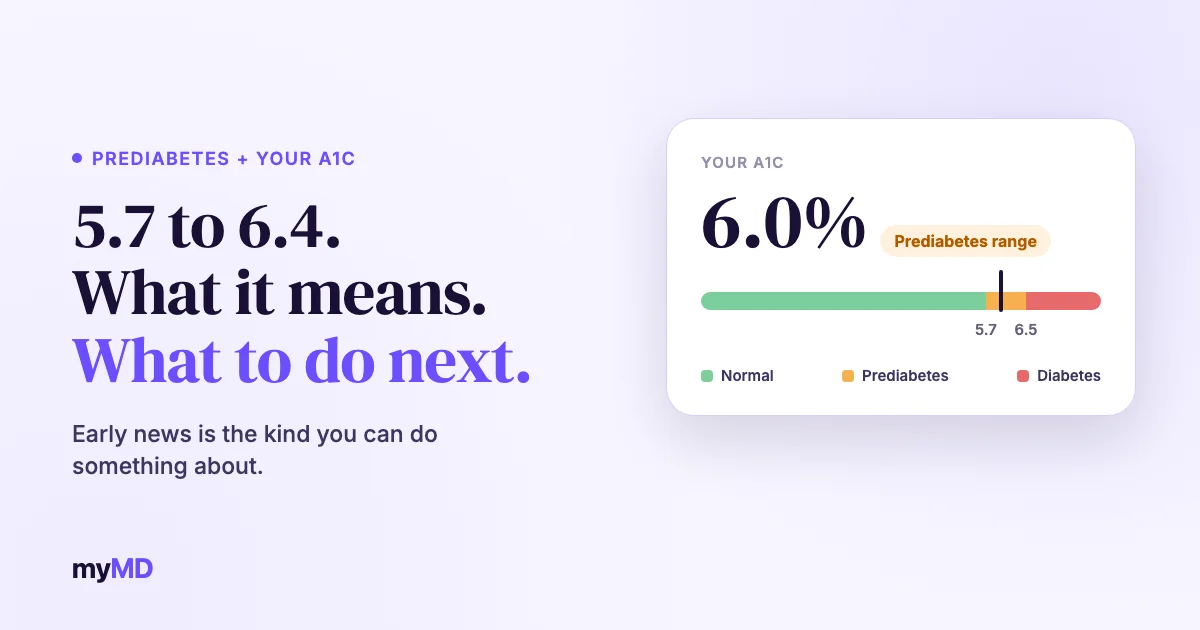
Your results come back. One number is flagged.
A1C: 6.0.
No one is in the room to explain it. Maybe your doctor's note says "borderline." Maybe the portal just put an "H" next to it. So you do what everyone does. You Google it at 11 p.m. and read the worst version of everything.
Let's slow this down.
The short answer: an A1C between 5.7% and 6.4% is the prediabetes range. Your average blood sugar is higher than typical, but not high enough to be called diabetes. It's very common, it usually has no symptoms, and it's the stage where modest changes in activity and weight make the biggest difference. Ask your doctor what they want to do next, and when to retest.
What is A1C?
A1C shows your average blood sugar over roughly the last three months. It isn't a single-day reading. It's closer to a long-exposure photo than a snapshot.
That's why it's useful. One big dinner won't move it. A few months of patterns will.
What is a normal A1C range?
These are the ranges the CDC uses to diagnose prediabetes and diabetes:
| A1C | What it's called |
|---|---|
| Below 5.7% | Normal |
| 5.7% to 6.4% | Prediabetes |
| 6.5% or higher | Diabetes |
If you're between 5.7 and 6.4, your blood sugar is higher than typical, but not high enough to be called diabetes.
For a rough sense of scale, that range lines up with an average blood sugar of about 117 to 137 mg/dL.
What is prediabetes?
It's a warning light. Not a diagnosis of diabetes. Not a life sentence.
It's also extremely common. The CDC estimates that about 115 million American adults have prediabetes. Many have no obvious symptoms, which is exactly why it gets missed. You can feel completely fine and still be in this range.
The honest part: prediabetes can progress to type 2 diabetes. But it doesn't have to, and this is the stage where your choices carry the most weight.
Why this stage matters
In the large Diabetes Prevention Program study, people with prediabetes who made lifestyle changes cut their risk of developing type 2 diabetes by about 58% over roughly three years. For people 60 and older, it was 71%.
What did those changes look like? Not extreme.
- Losing about 7% of body weight, for people who had weight to lose
- About 150 minutes of physical activity a week
That's it. Ordinary, repeatable habits.
What to do next
1. Don't panic, and don't ignore it.
A single result is information, not a verdict. Ask your doctor what they want to do next: repeat the test, check your fasting glucose, or something else.
2. Know the test isn't perfect.
A1C can read higher or lower than your true average in some situations, including anemia, certain blood conditions, kidney or liver disease, and pregnancy. If your number surprises you, ask whether anything could be skewing it.
3. Ask about a lifestyle change program.
The CDC recognizes lifestyle change programs, part of the National Diabetes Prevention Program, built around the same changes that worked in the research. They run for a year with a coach and a small group, in person or online.
4. Move more, in a way you'll actually keep doing.
150 minutes a week is about 20 to 30 minutes a day. A brisk walk counts.
5. Look at what you eat, not what you "should" eat.
You don't need a perfect diet. You need to see your real one. Most people are surprised by their sugar, carbs and fiber once they see it written down.
6. Retest on your doctor's schedule.
The point is to see whether your habits are moving the number. Ask when to check again.
Where myMD fits in
You shouldn't need a medical degree to understand your own results. Here's how myMD helps with each step:
- Upload your report to Health Vault. Ask myMD reads the actual document and explains what's elevated, what's normal and what it means, in plain language. Not a generic internet answer. Not a diagnosis. Clarity.
- Compare your reports over time. Ask myMD can compare up to five reports and summarize what changed, so when you retest, you can see whether your A1C is moving in the right direction.
- Track what you eat. Diet & Nutrition tracks six macros, including sugar, carbohydrates and fiber, with a Nutrition Coach that works around your restrictions and allergies.
- Track how you move. The Workout Tracker shows your active minutes and progress toward a daily goal, and it syncs with Apple Health and Google Health Connect.
- See the whole picture. Health Score turns what you track into a single number, and Ask myMD can look across your food, workouts and records to answer questions like "what has changed since my last report?"
- Keep it in one place. When you retest, your new report sits right next to the old one. Here's why that matters.
None of this replaces your doctor. It makes the conversation with your doctor better, because you walk in understanding your own numbers. Here's how to read the rest of your lab report, too.
The bottom line
An A1C between 5.7 and 6.4 isn't bad news you can't act on. It's early news. And early news is the kind you can do something about.
Understand the number. Make one small change. Check again.
If you want a longer look at life after a diagnosis, read Diabetes Isn't One Appointment. It's Every Day In Between.
Common questions
Is an A1C of 6.0 bad?
It's in the prediabetes range, so it's worth acting on, but it isn't diabetes. Your doctor may repeat the test or check your fasting glucose to confirm it.
Does prediabetes have symptoms?
Usually not. Most people feel completely fine, which is why a blood test is the only reliable way to know.
Can prediabetes be reversed?
Often, yes. The CDC says that with early action, you can reverse prediabetes to prevent or delay type 2 diabetes. Modest weight loss, healthier eating and regular activity are the changes that made the difference in research.
How often should I retest my A1C?
With prediabetes, the CDC says your doctor will likely recommend repeating the test every 1 to 2 years, though they may check sooner. When you do, upload the new report and Ask myMD can compare it with your earlier ones.
myMD is free to start. Download it on iOS or Android.
This article is for general information only and isn't medical advice. myMD doesn't diagnose or treat conditions. Talk to your doctor about your results and what's right for you.
Download myMD